
Special thanks to Simona Șerban, Alexandru Maleş and Cătălin Baluţ from ETHCluj for feedback and review.
Overview
Romania is a strong engineering country.
Across cities like Bucharest, Cluj-Napoca, Timișoara, Iași, Sibiu, and Brașov, there are thousands of students emerging from strong technical universities as well as highly skilled developers working in global tech companies. Most of them are still in Web2, building products for international clients, but the foundation is there for a shift.
Ethereum is not yet mainstream locally, but it is slowly becoming visible to technical people who are curious, independent, and looking for more ownership in what they build.
At the same time, there is growing interest in AI. Many developers are already experimenting with AI tools, agents, and systems. For some, blockchain and AI are starting to overlap.
Romania in Context
Romania has produced world-class thinkers, artists, and engineers, from Constantin Brâncuși, George Enescu and Emil Cioran to strong modern technical talent. But the country is easy to underestimate. Contributions tend to travel outward quietly, without much local fanfare.
The communist period left a mark on how Romanians relate to institutions. Under Nicolae Ceaușescu, Romania developed one of the most intrusive surveillance system in the Eastern Bloc. The Securitate kept detailed records on citizens, which could be used to monitor, pressure, or control individuals.
The 1990s added an economic dimension to that distrust. The transition period was marked by instability: inflation peaked at over 250% in 1993, savings lost value, and privatization was often uneven and contested. Property rights were not always clearly defined or consistently enforced, with paper-based land registries and disputed ownership transfers persisting in some cases. For many Romanians now in their forties or fifties, this period is within living memory. In this context, ideas such as tamper-resistant records or decentralized finance can carry different resonance than in countries without similar experiences.
After joining the European Union in 2007, Romania experienced significant emigration, including a substantial share of its working-age population, one of the larger outflows in modern European history. Many skilled workers, including engineers and medical professionals, moved to Western Europe. Those who remained in the tech sector often worked with international clients and markets. When projects like Ethereum emerged as globally distributed engineering efforts, Romanian developers were already accustomed to operating in cross-border environments.
It has some of the fastest internet in the world. It skipped the legacy copper infrastructure that slowed down most of Western Europe, going straight to fiber in the early 2000s. Dense urban housing made rollout cheap, and competition kept prices low. Gigabit connections are now standard and affordable in most cities.
What the Ecosystem Looks Like
Adoption Metrics
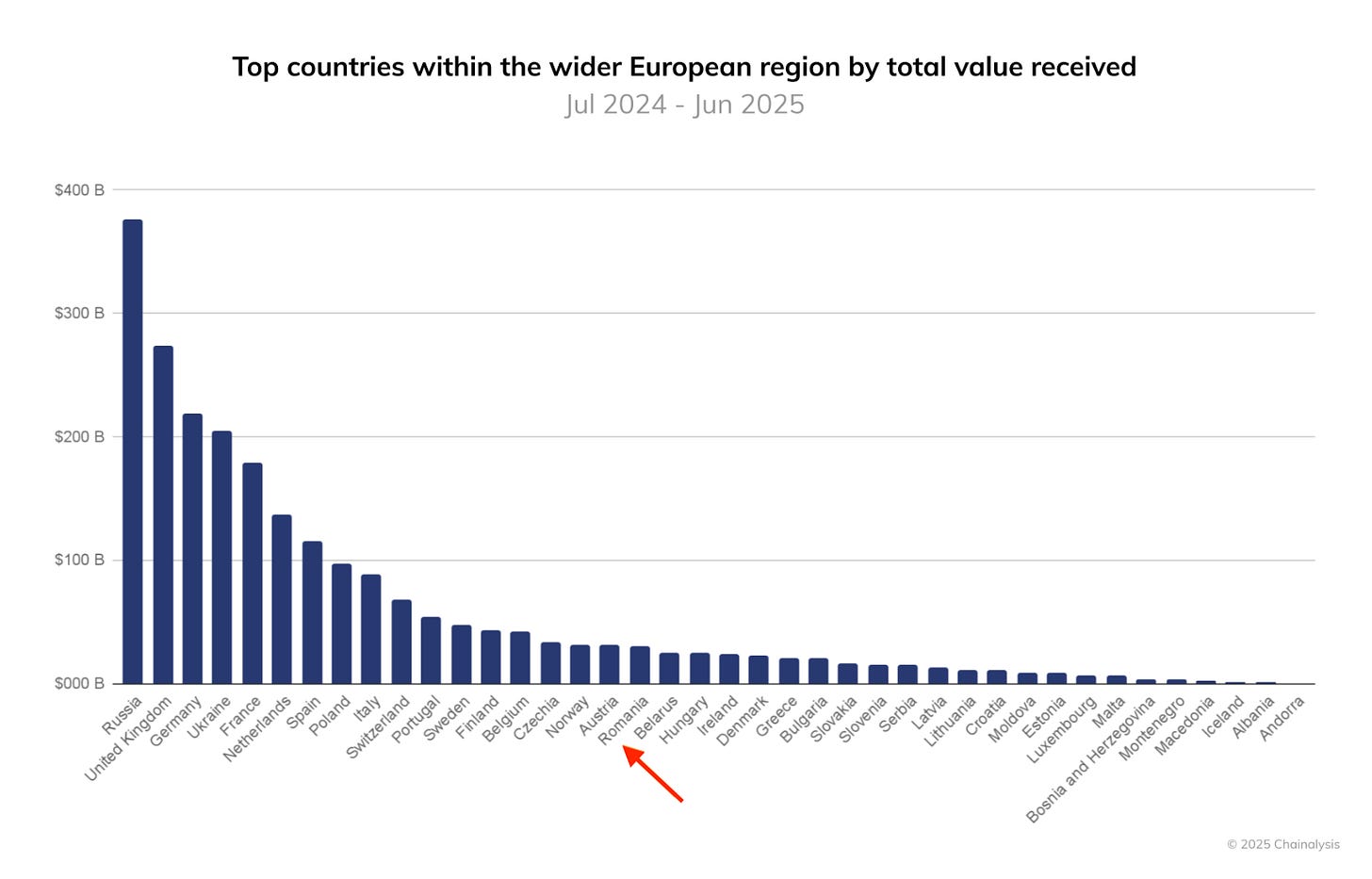
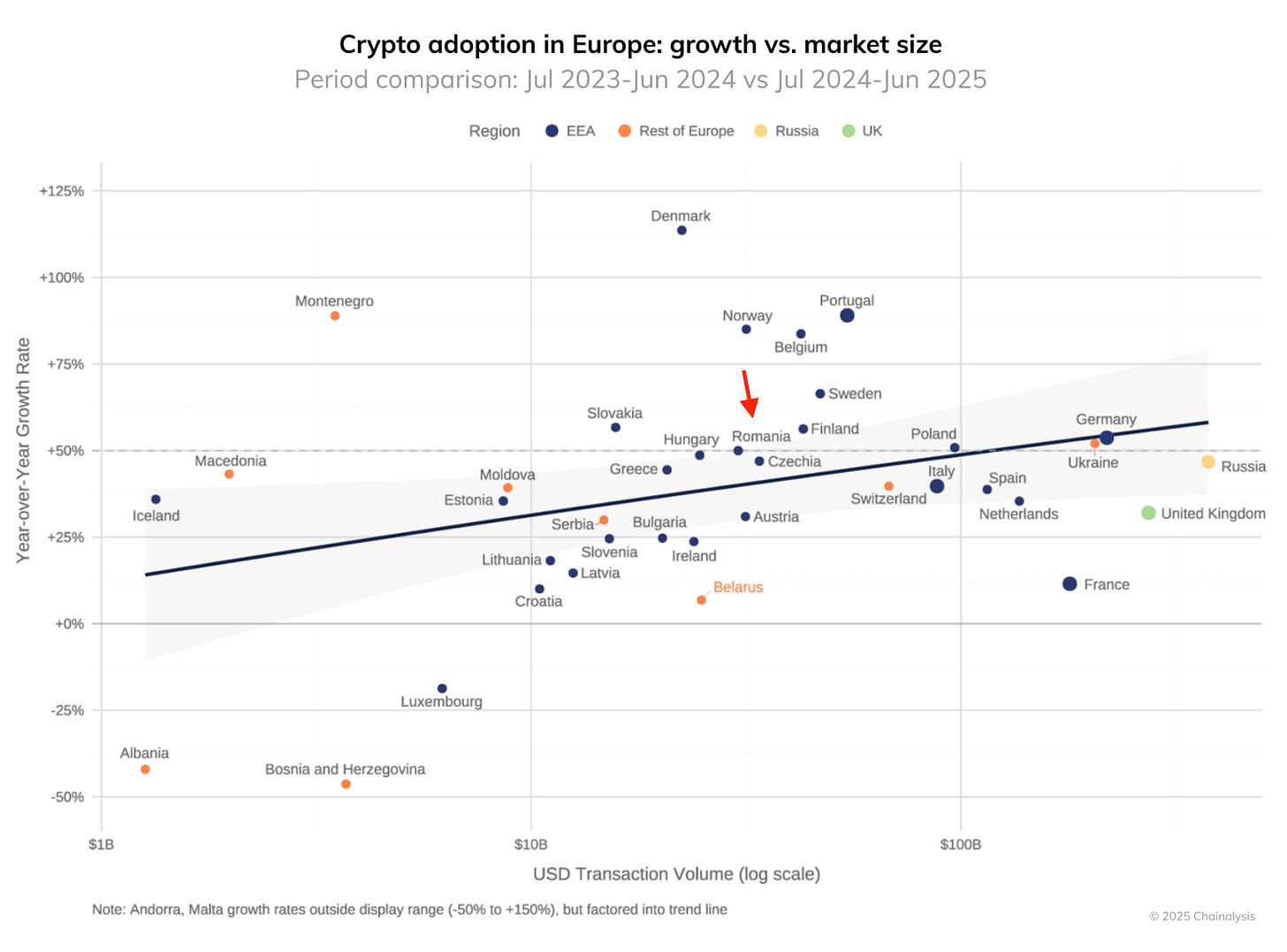
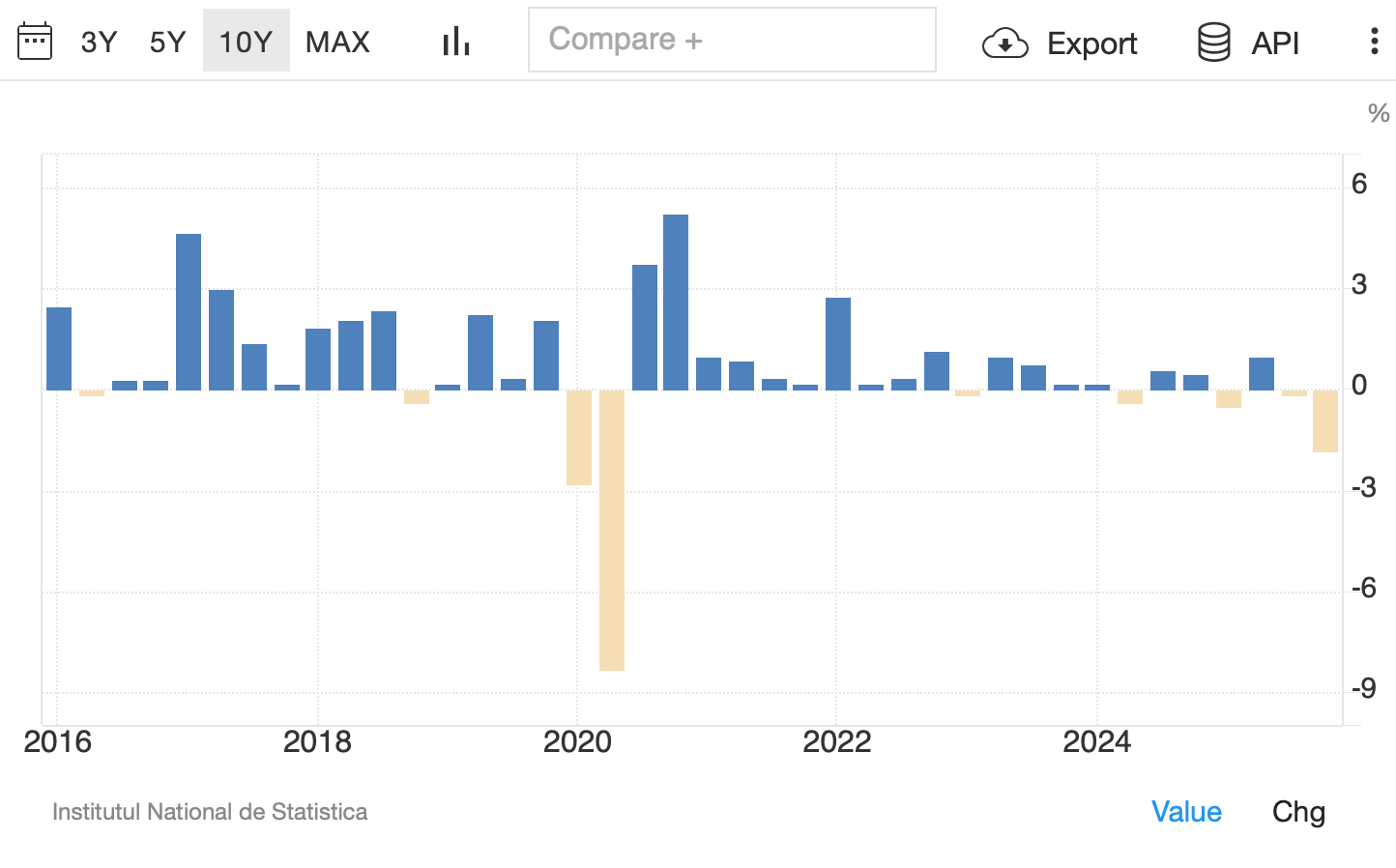
Global Rankings: Chainalysis 2025 Global Crypto Adoption Index: 59th globally
While neighboring countries like Ukraine (9th) and Turkey (6th) see high adoption as a response to war-time instability or currency devaluation, Romania’s 59th-place ranking reflects a more stable economy where users engage with crypto as a tech-forward investment rather than a financial lifeline.
What Is Actually There
Romania doesn’t have a single anchor company that everyone orbits. No Romanian equivalent of Golem in Poland, no founding team that became a cultural center of gravity.
What it has instead is a dense, distributed layer of technically serious builders.
Péter Szilágyi has been one of the most significant contributors to go-ethereum, the client that runs a large portion of the Ethereum network. In Ethereum circles internationally, his name is well known. In Romania, the Ethereum community knows him well too, even if broader public awareness hasn’t caught up yet. Romania’s connection to Ethereum goes back further still, Mihai Alisie, from Sibiu, co-founded Bitcoin Magazine with Vitalik Buterin in 2011 and was one of Ethereum’s eight original co-founders.
Most of what Romania has built since then is infrastructure.
Bware Labs, now part of Alchemy, showed how Romanian teams can operate at global scale, building core Web3 APIs and node services. 01NODE works in a similar space, focused on validator infrastructure and staking. QED, a Web3 development team from Timișoara, built such a close relationship with The Sandbox over several years that they were acquired in 2025 and became The Sandbox Romania. Ocean Protocol, founded by Romanians, sits at the intersection of Ethereum, decentralized data, and AI, a prescient position given where developer interest is heading.
Security is a natural fit too. Romanian engineers have deep roots in cryptography and backend systems, and teams like Cybasecurity and Adevăr Labs have built on that foundation with smart contract audits and blockchain security work. Crypto Sentinel works further upstream, on cybercrime and blockchain forensics.
At the edges, something more research-oriented is taking shape. dSentra, founded by a contributor connected to the Ethereum Fellowship, works on decentralized infrastructure and coordination systems, closer to the core philosophy of what Ethereum is trying to build.
And beneath all of it: a large, mostly invisible layer of development companies and independent builders across Cluj, Bucharest, Timișoara and Iași, writing smart contracts, building DeFi components, and developing backend systems for international clients. No local press. No announcements. Just work, shipped quietly into the global ecosystem.
Community Infrastructure
ETHBucharest
ETHBucharest is one of the main Ethereum-focused gatherings in Romania, centered in the capital. Bucharest naturally has scale as being the capital city of Romania. It brings together corporates, startups and a large number of engineers who are already working in the crypto industry.
ETHCluj
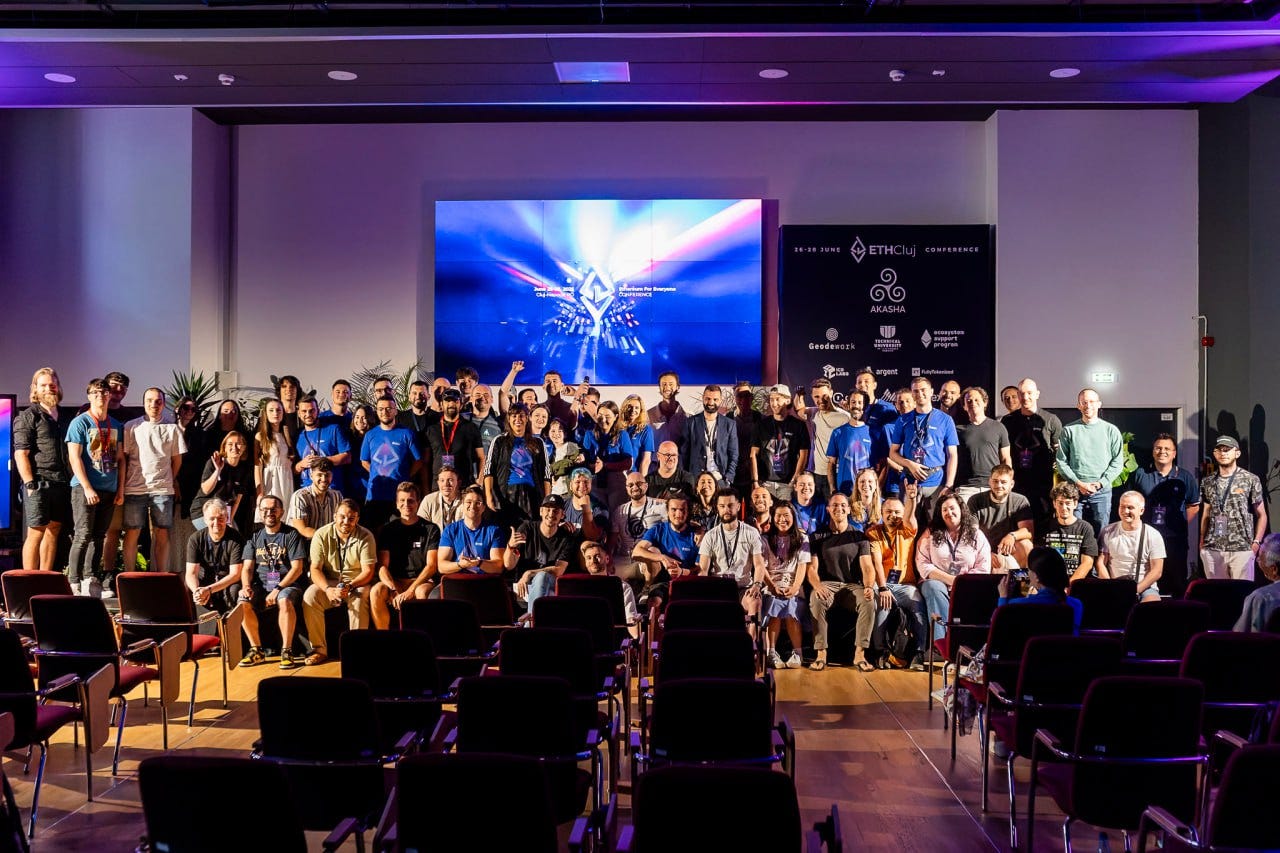
ETHCluj is a focused community hub in Cluj-Napoca, closely connected to the city’s strong student and technical base. They run year-round initiatives and a flagship Ethereum for Everyone conference in May, with workshops, technical talks, and builder-first side events. It has become a natural entry point for young developers exploring Ethereum for the first time.
Others
Timișoara and Iași are important technical centers, with strong universities and growing developer communities.
Sibiu and Brașov are smaller, but they contribute through remote-first developers.
University Talent Pipeline
Romania has a strong tradition of technical education, with universities across the country emphasizing computer science fundamentals, cryptography, distributed systems, and security, areas that map directly onto what Ethereum’s infrastructure layer requires. Increasingly, AI and data science are part of the mix too.
Top technical talent is concentrated across a few key cities and institutions. In Bucharest, Politehnica University and the University of Bucharest are the main sources of engineering graduates, particularly in computer science and mathematics. In Cluj-Napoca, Babeș-Bolyai University and the Technical University of Cluj-Napoca produce a large share of highly skilled developers, with strong foundations in algorithms, distributed systems, and backend engineering. In Timișoara and Iași, Politehnica University, West University, and Alexandru Ioan Cuza University consistently turn out strong technical graduates. Even smaller centers like Brașov and Sibiu contribute, mostly feeding into remote-first or international teams.
Formal blockchain education is still early. Alexandru Ioan Cuza University in Iași offers dedicated blockchain coursework with hands-on labs. West University of Timișoara launched a postgraduate program in Entrepreneurship in Blockchain. These are exceptions rather than the norm.
Most students find their way through other channels, online resources, hackathons, communities like ETHCluj and ETHBucharest. The pattern is consistent: solid engineering foundations from university, then Ethereum discovered independently through community and experimentation.
Policy Environment
Romania follows the EU regulatory framework. While MiCA has been directly applicable across the EU since December 30, 2024, Romania is still operationalizing its national authorization framework, creating a temporary gap between legal applicability and practical implementation.
Current Regime
Crypto service providers are currently operating under MiCA’s transitional regime, which allows entities previously registered under the AML framework to continue operating until July 1, 2026, or until they receive (or are denied) MiCA authorization, whichever comes first. AML registration and MiCA authorization are not equivalent, the former does not confer passporting rights or cross-border service eligibility within the EU.
After July 1, 2026, any entity without a MiCA license will be in breach of EU law. The Romanian Financial Supervisory Authority (ASF) has acknowledged capacity constraints that may delay application processing, creating timing risks for market participants.
On taxation (which operates independently from MiCA authorization)
Crypto is treated as an asset under the Fiscal Code, not legal tender.
Gains from crypto transactions are classified as “income from other sources” and taxed at 16% (raised from 10% in 2026).
The de minimis exemption applies when gains are under RON 200 per transaction and total annual gains do not exceed RON 600.
The same 16% corporate tax rate applies to companies.
What Is Missing
There is a large pool of Web2 developers who could move into Web3. They have the technical foundations. What they lack is entry points, hands-on experience, local connections, and a job market that offers paid opportunities in the space rather than purely international client work.
AI may be the bridge. Many developers are already exploring it, and the tooling and systems thinking involved overlap more with Web3 than is commonly acknowledged. Projects at the intersection, agent-based systems, verifiable computation, decentralized AI infrastructure, may be where the next generation of Romanian builders first encounters the space seriously.
There is also a need for more physical and digital spaces where developers can learn together, build together, and meet others working on similar things. ETHCluj is doing this well at the student level. The gap is at the mid-career level, where engineers with strong Web2 backgrounds might cross over if the community infrastructure existed to receive them.
What Comes Next
Romania is well-positioned to grow its Ethereum ecosystem. It combines deep engineering talent, excellent digital infrastructure, and a historical skepticism toward centralized institutions born from its communist past and turbulent transition period.
The next key moment to watch (and participate in): the ETHCluj Ethereum for Everyone conference again on May 13-14, 2026 in Cluj-Napoca.
Further Reading
My favorite things Romania by Tyler Cowen
Why Romania Excels in International Olympiads by Jordan Lasker
Markets in Crypto-Assets Regulation (MiCA) by ESMA
Romania’s New Crypto Regulation under MiCA - Compliance & Licensing by BMA Legal
Thanks for reading!
Best regards,
Riely & the Geode Labs team
Have thoughts on this issue? Reply or DM me - I read everything.
Want to support Local Ethereum? Reach out about sponsorships.

Riely
Riely is the Editor in Chief of Local Ethereum, covering Ethereum and crypto adoption stories from around the world. Based in Berlin, she covers stories from India, Argentina, Poland, Taiwan, Serbia, and beyond, with a focus on how decentralized technology intersects with local culture, economics, and politics.
Published April 29, 2026 · 8 min read
Local Ethereum
Enjoying the read? Get this in your inbox.
In-depth Ethereum ecosystem coverage: regional deep dives, monthly roundups, and global analysis. Twice a month, free.
Subscribe, it's free